Having only become an internationally-renowned destination within the last ten years, English infrastructure in Hokkaido is still very much being developed. Although we are lucky enough to live in an age where handy apps and AI translation makes life a lot easier, these digital options lack the interpersonal element that trying to communicate for yourself can provide.
Useful Japanese phrases for your adventures in Hokkaido, from “Konnichiwa” to “Keppare”
Travel Tips
By Hattie
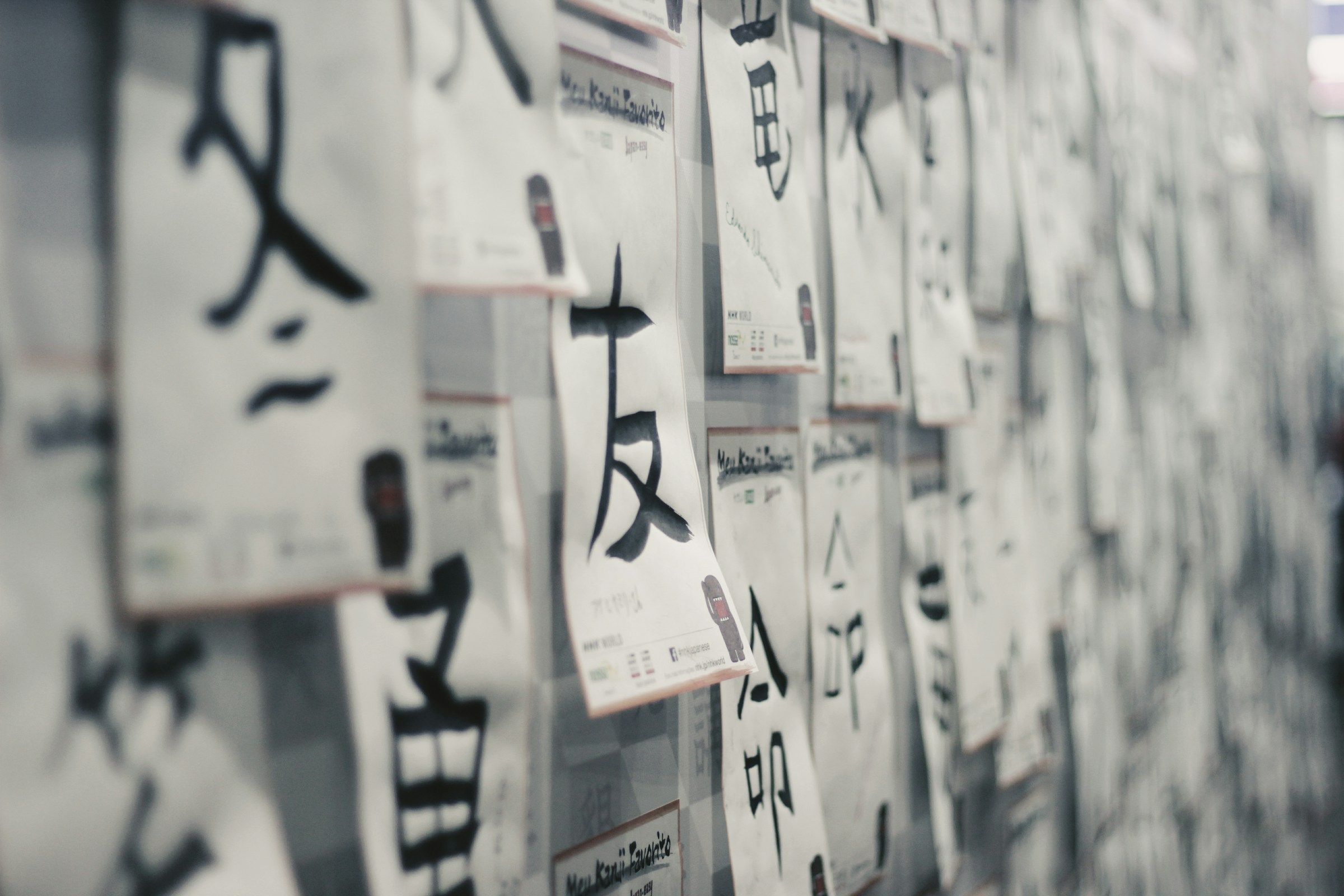
But no need to start frantically preparing to take a Japanese language course - the Adventure Hokkaido team has got you! Many of our guests are keen to learn some basics to help them communicate with locals during their time in Hokkaido. Based on their requests and with input from our guides and staff, we’ve come up with a handy list of words and phrases that will help you to navigate your way around Hokkaido and, we hope, make some friends along the way!
Are you ready? Class is in session!
Greetings #
Konnichiwa = Good afternoon
Let’s start with a word you’ve more than likely heard before! While this is often translated as “hello”, it is actually only used during daylight hours after the morning has passed. You’ll most often hear it used from around 11am until the point that it starts to get dark. When hiking in the mountains, however, this handy greeting is used at almost any time from morning through to the afternoon, as hikers customarily greet one another as they pass. So there’s no need to worry too much if you use it a little early — people will understand you’re simply saying hello!
Ohayou (gozaimasu) = Good morning
This is a phrase you’ll hear a lot on our tours!
Many guests ask us what “gozaimasu” means. In this case, it’s simply a phrase you can tack on to “ohayou” to make it more polite. Similar words that are attached to other phrases, like “onegaishimasu” and “kudasai”, have the same function.
Konbanwa = Good evening
Most people will start greeting you with this phrase as it begins to get dark outside.
Oyasumi(-nasai) = Goodnight
Another phrase you’ll often hear from our guides on our tours when you turn in for the evening after dinner. (“nasai” is another politener!)
Arigatou (gozaimasu) = Thank you
Another phrase that you may be familiar with - and always appreciated in a culture as polite as Japan’s.
Genki? / Genki! = How are you? / I’m well!
In a casual context, the word “genki” can be used as both a question and an answer! Note that this doesn’t refer to your physical health - it’s more to do with your general state of mind and mood in the moment.
Daijoubu? / Daijoubu! / Daijoubu Janai… = Are you okay? / I’m okay! / I’m not okay…
As with “genki”, this expression can be used as both a question and an answer if you’re feeling all right. However, unlike “genki”, this expression refers to your physical health rather than your state of mind. So, if you’re not feeling physically well or you’re injured, you may want to answer with the negative, “Daijoubu janai”.
Ganbatte! / Ganbaru! = Do your best! / I’ll do my best!
This is an expression you’ll hear a lot in Japan, as giving it your all is a key part of Japanese culture. “Ganbatte” has various translations, such as “good luck” or “you can do it” and is generally a term of encouragement. The reply, “Ganbaru!” in all contexts can naturally be translated as, “I will!”
Otsukaresama desu! = Well done!
Often said at the end of something that is considered arduous, such as the end of the working day, or in the context of our tours, the end of a day of hiking.
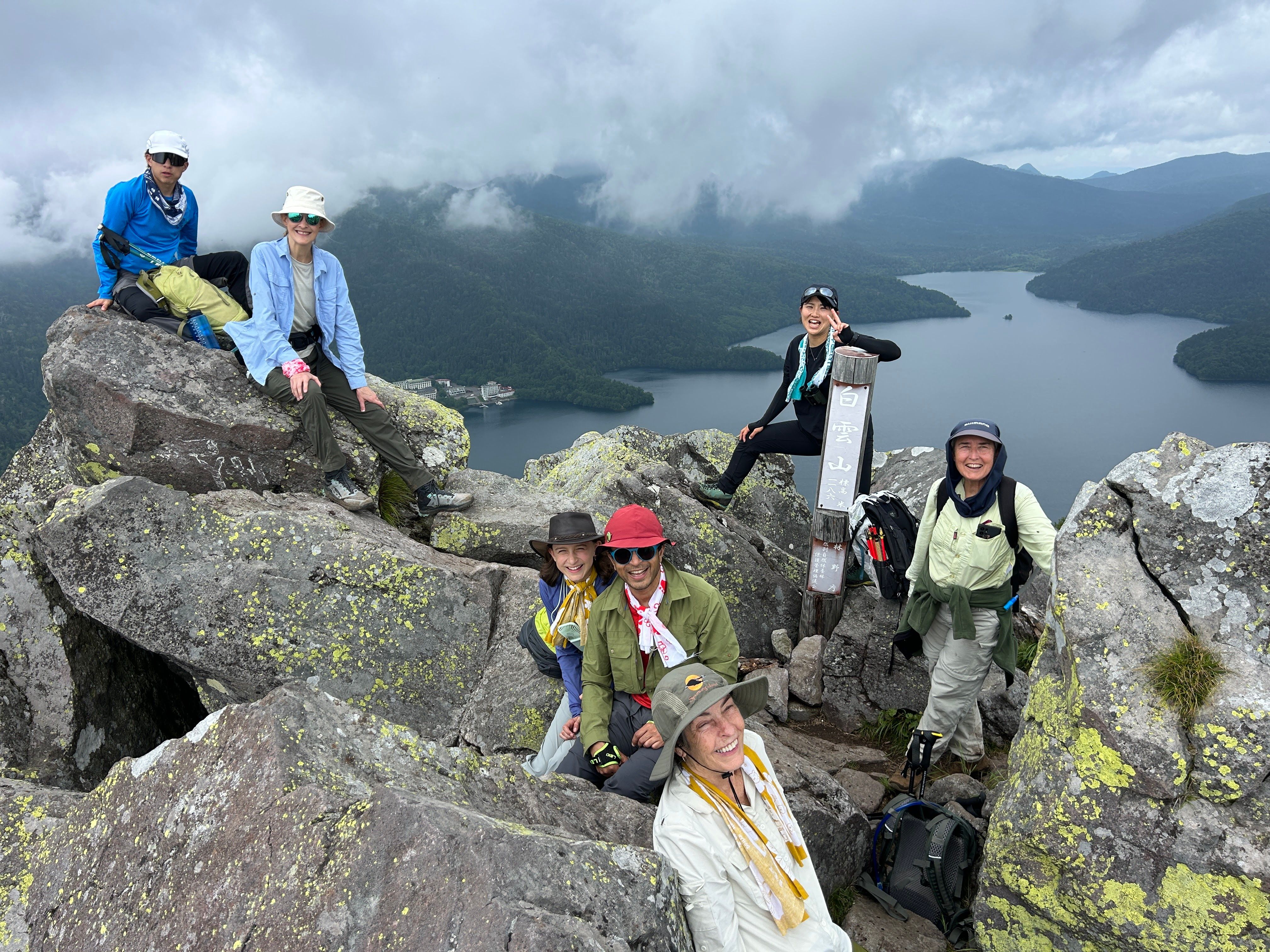
A fun play-on-words exists in the Japanese hiking community - “Otsukareyama desu”! “Yama” means “mountain” in Japanese, so hikers might jokingly say this to one another at the end of a hike.
Apologies & Requests #
Sumimasen = Excuse me / I’m sorry
This is an extremely useful phrase that you can employ in a number of situations! You can use it when squeezing through crowds, to thank someone for holding open a door or to apologise for bumping into them. Its most useful application, however, is when trying to get staff’s attention in an izakaya!
〇〇 kudasai = 〇〇, please
This phrase is to be used when you want someone to give you something. “Kudasai” means a formal “give me,” if translated literally. If you know the Japanese word for something, you can stick it in front of “kudasai” to make a complete sentence.
If you don’t know the Japanese word for something, don’t worry - you can always point to something and say, “Kore kudasai” - “This, please!” This is very useful for menus with photographs!
You can also tag “kudasai” to some verbs to make the request more polite, which is why you will see it come up many more times in this blog. For example:
- Biru kudasai = A beer please
- Kore kudasai = This please
- Oshiete kudasai = Please tell me
Chotto matte (kudasai) = Wait a moment (please)
Sometimes you might need a moment before you can do something - like to get your passport out of your bag, or when finding that last pesky 100yen coin in your wallet! This sentence is useful for those times. Adding the “kudasai” to the end is optional, but recommended for politeness. You can drop it for, say, Adventure Hokkaido guides!
Numbers #
What language guide is complete without numbers? Here are Japanese numbers one through twelve. These are very useful when trying to find train platforms or bus stops or telling the time.
- Ichi = 1
- Ni = 2
- San = 3
- Shi = 4
- Go = 5
- Roku = 6
- Shichi = 7
- Hachi = 8
- Kyuu = 9
- Juu = 10
- Juu-ichi = 11
- Juu-ni = 12
The following numbers are denominations of Japanese currency (Yen, which is pronounced the same in Japanese) and so they’ll also be quite useful on your travels.
- Go-juu = 50
- Hyaku = 100
- Sen = 1,000
- Go-sen = 5,000
- Ichi-man = 10,000
Timings #
〇〇 ji = 〇〇 o’clock
Remember the numbers you just learned? You can use those to tell the time in Japanese! This knowledge is of course useful for when you need to catch a train. For example:
- Kyuu-ji = 09:00
- Juu-ni-ji = 12:00
Japanese digital clocks use the 24 hour system, but speakers often use the Japanese words for AM and PM, Gozen and Gogo respectively. These words go before the time itself - so, the opposite of western time-telling practices. Here’s some examples:
- Gozen kyuu-ji = 9 AM
- Gogo kyuu-ji = 9 PM
“Ji” means “o’clock”, but you can add some suffixes to it to be a bit more precise.
- ~ han = Half Past
- e.g Gozen Ju-ji-han = 10:30 AM
- ~ go-fun - Quarter-past / :15
- e.g. Gogo shichi-ji-ju-go-fun = 7:15 PM
- ~ ju-go-fun - Quarter-to / :45
- e.g. Gozen ku-ji-yon-ju-go-fun = 9:45 AM
Shuppatsu & Touchaku = Departure & Arrival
These are very useful words that you might hear guides on our tours use regularly!
You can add abbreviated versions of these words after times to create a complete sentence. For example:
- Gozen Ju-ji-chaku = Arriving at 10AM
- Gogo shichi-ji-hatsu = Departing at 7PM
Nanji? = What time?
Once again, you may well hear our guides using this on our tours. You can use it as a standalone question that can be responded to with timings, or you can use them to construct a sentence - 〇〇 wa nanji desu ka? = What time is 〇〇?
Here are some words you may find useful in this context!
- Yuushoku = Dinner
- Choushoku = Breakfast
- Ranchi = Lunch
- Heiten-jikan = Closing time (for stores)
- Heikan-jikan = Closing time (for museums, facilities etc)
Combined with nanji desu ka, you get: Heikan-jikan wa nanji desu ka? = What time does the museum close?
You can also use this with “shuppatsu” and “touchaku”:
- Shuppatsu wa nanji desu ka? = What time do we depart?
- Shokai-shuppatsu wa nanji desu ka? = When is the first departure?
Food & Drink #
The below is just a basic introduction to some handy phrases when eating out. But if you’d like a supplementary lesson, head on over to our blog about eating out in Hokkaido for more useful phrases!
Biru hitotsu kudasai! = A beer, please!
Some might say that this is the most important phrase you’ll ever need to know in Japanese!
“Nama” is the word for a beer from the tap while “biru” usually refers to canned or bottled beers. “Nama kudasai” is another useful phrase if you prefer draught beer!
Counting dishes
Earlier, we learned about numbers - but Japanese is a little complicated when it comes to numbering objects. Each object has its own counting system, depending on its size, length, shape, whether it’s alive or dead and so on.
However, there is a useful generic counter that we used in the very important phrase above. This can be used for ordering food or when out shopping in general.
- Hitotsu = One (object)
- Futatsu = Two (objects)
- Mittsu = Three (objects)
- Yotsu = Four (objects)
- Itsutsu = Five (objects)
Rather than troubling yourself to learn a whole glossary of Japanese food and drinks, it’s much easier to point to something you’d like on a menu and combine these counters with a very useful phrase we learned earlier - “Kore kudasai”:
- Kore, hitotsu kudasai = One of these, please.
- Kore, yotsu kudasai = Four of these, please.
Counting people
People have their own special counter in Japanese and these will be quite useful when asking for a table upon entering a restaurant. You can say these words on their own while holding up the corresponding number of fingers and restaurant staff will understand pretty quickly what you need!
- Hitori = One person
- Futatri = Two people
- San-nin = Three people
- Yo-nin = Four people
- Go-nin = Five people
However, when you enter a restaurant in Hokkaido, staff will often ask you “Nanmei-sama desuka?” which is a respectful way of asking, “How many are you?”
You can reply with the numbers above, or you can reply with the “~mei” counter, a more formal way to say how many you are. “Hitori” remains the same if you are on your own, but staff may repeat “Ichi-mei-sama” to confirm that you are one person.
- Ichi-mei = One person
- Ni-mei = Two people
- San-mei = Three people
- Yon-mei = Four people
- Go-mei = Five people
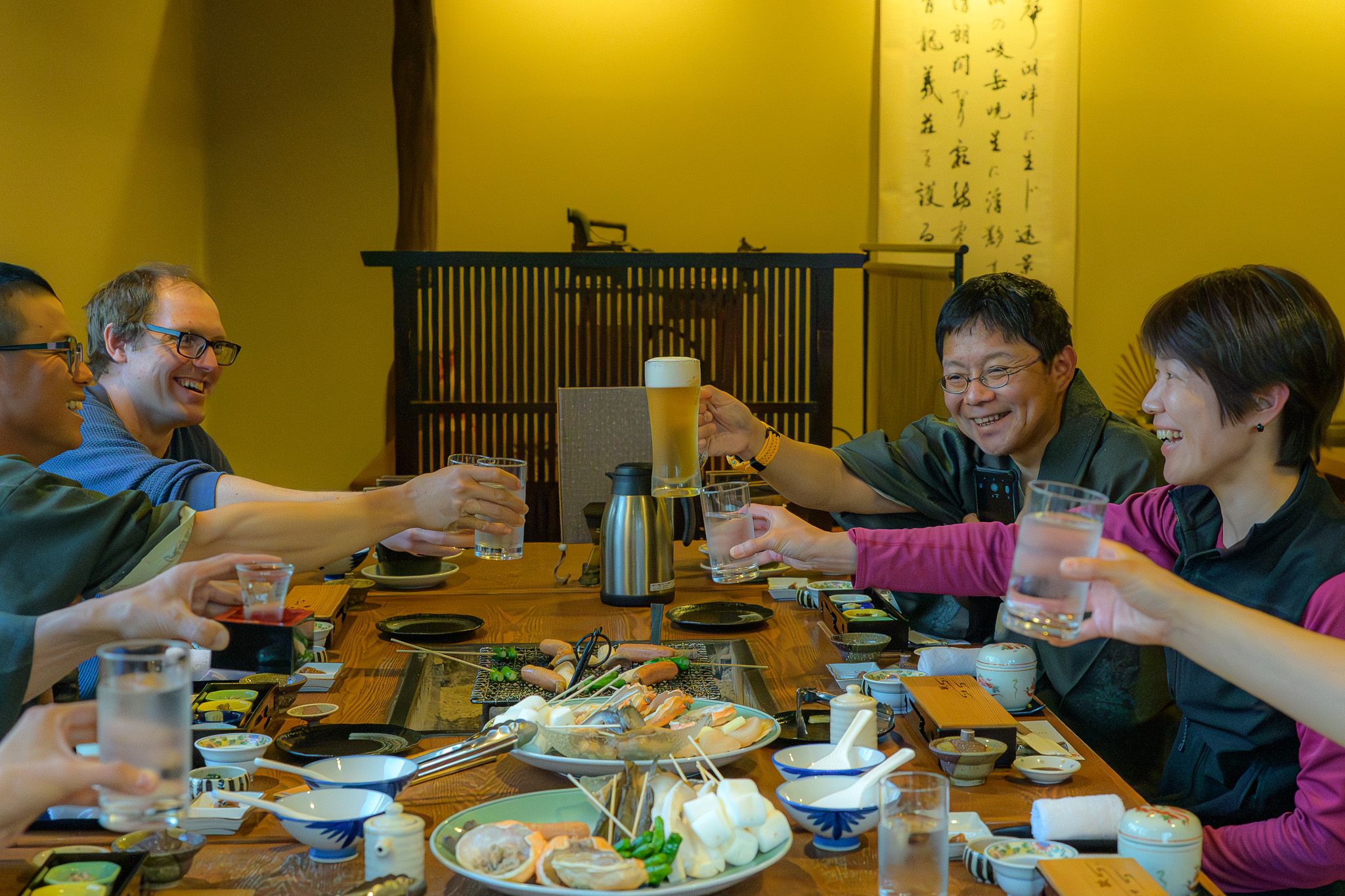
Kanpai! = Cheers!
Another useful one that our tour guests always learn!
Itadakimasu! = Let’s eat! or Bon appetit!
A useful phrase that you can say before digging into your meal. Literally translated, it means “I receive”!
Gochisousama deshita! = That was delicious! Thanks for the meal!
Although a bit of a mouthful (pun intended), this polite phrase can be used either at the end of a meal to express satisfaction or as a compliment to staff, the chef or the owner as you leave. While “Arigatou Gozaimasu” is commonly used by non-native speakers to thank restaurant staff, this phrase is much more natural.
Totemo oishii desu! = This is really tasty!
“Oishii” means “tasty” in Japanese, so that word alone is useful for a great number of situations. This phrase is very handy when staff come to check on your meal and you’d like to give them a compliment.
Irimasen = No thank you
A more literal translation for this would probably be, “I don’t need it / any”. You can use this to politely decline offers of, for example, more water at a restaurant or the default plastic bags that are ubiquitous at convenience stores across Hokkaido.
Irasshaimase! = Welcome!
You don’t need to remember this phrase or use it yourself, but you’ll often hear it shouted when you enter a shop or restaurant. If you’re wondering what people are saying, it’s simply a friendly welcome. Many people don’t reply, but you can respond with konnichiwa or konbanwa as a greeting.
Kaado wa tsukaemasu ka? = Can I use my credit card?
This phrase can be helpful when you don’t have much cash on you and want to check in advance whether the shop or service you’re about to use accepts credit cards. In rural Hokkaido, there are still plenty of places that only take cash, so it’s worth confirming you can pay before you realise you don’t have a way to!
When you’re lost #
〇〇 wa doko desu ka? = Where is 〇〇?
A simple way to ask where something is. Before you ask, be sure to use a polite “Sumimasen” to get someone’s attention! Japanese people don’t like to see visitors getting lost and will normally be very happy to help you as best as they can, despite the language barrier. They may pull out a map or, even, walk you to where you’re headed yourself!
You put it to use by placing the think you are looking for at the start, like so:
- Toire wa doko desu ka? = Where is the toilet?
- Eki wa doko desu ka? = Where is the station?
Here are a few more handy words that you might want to use with this phrase:
- Basu-tei = Bus stop
- Fune-noriba = Ferry pier
- Takushi-noriba = Taxi stand
- Chuusha-jo = Parking lot
- Yamagoya = Mountain hut
- Tozan-guchi = Trailhead
- Doraggu sutoa = Drug store
- Supa = Supermarket
- Konbini = Convenience store
- Yuubinkyoku = Post office
- Ei-ti-emu = ATM
〇〇 wa dochira desu ka? = Which way is the 〇〇?
In a very similar way to “doko”, “dochira” can be used when asking for directions. For example, if you reach a junction on a hiking trail and aren’t sure which way to go (or the signpost doesn’t make sense), you can ask “Tozan-guchi wa dochira desu ka?” = “Which way is the trailhead?”
In everyday Japanese, dochira is used interchangeably for both where (location) and which way (direction). It can also sound slightly more polite than doko when you’re asking about a location, so it’s a handy word to keep up your sleeve.
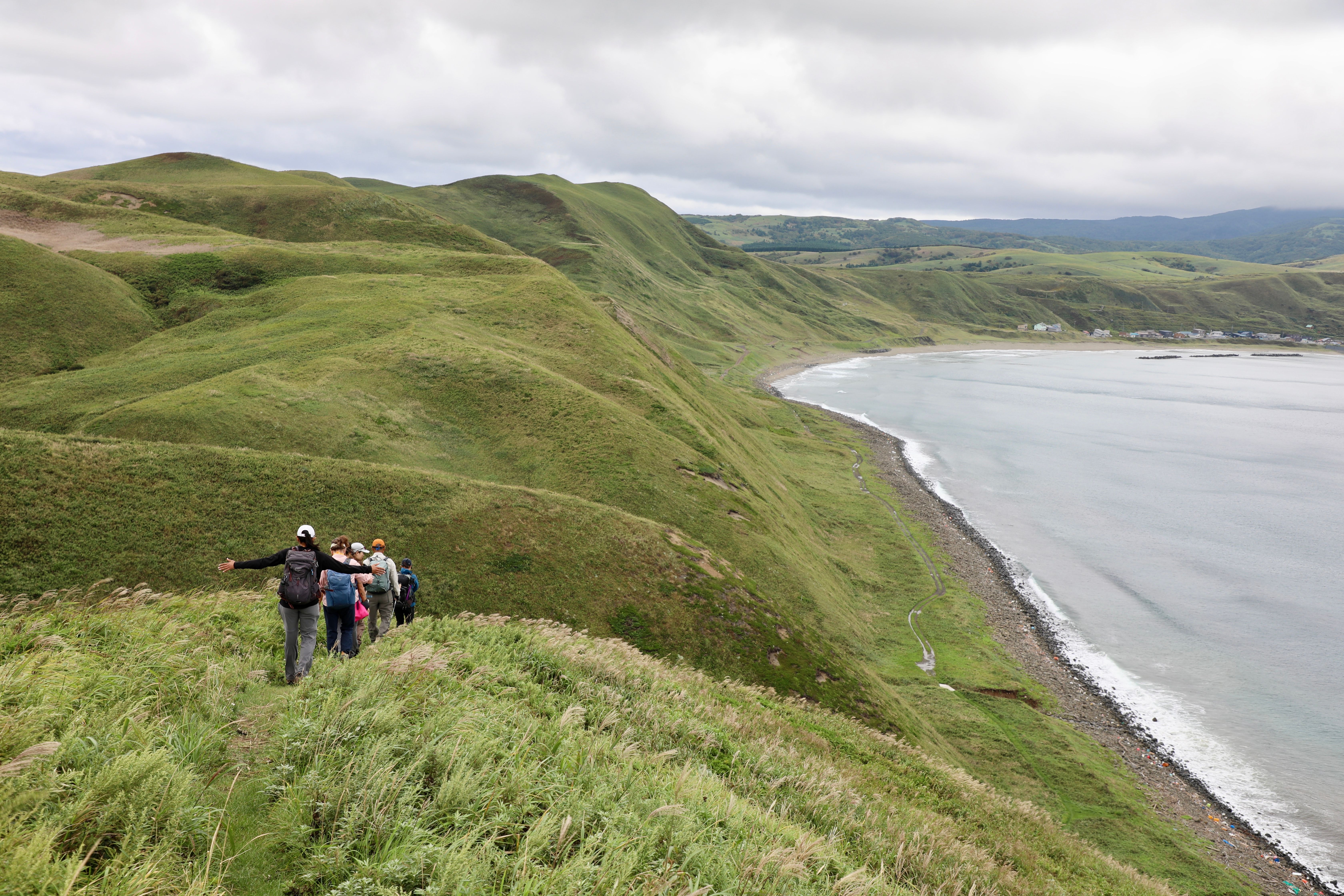
〇〇 ni ikitai desu = I want to go to 〇〇
Like the above phrases, this can be used to ask for directions. However, it’s also quite useful as a pretext to the above if your final destination is perhaps not in the vicinity.
Example:
- Kushiro ni ikitai desu. Basu-tei wa dochira desu ka? = I want to go to Kushiro. Where is the bus stop?
Emergency! #
Tasukete! = Help!
Slipped down a muddy slope off the hiking trail? Fallen and something doesn’t feel right? Or maybe, you’re being chased down by a mob of pitchfork-wielding raccoon dogs?! One shout of this, and anyone nearby who should happen to hear it will almost certainly come to your rescue.
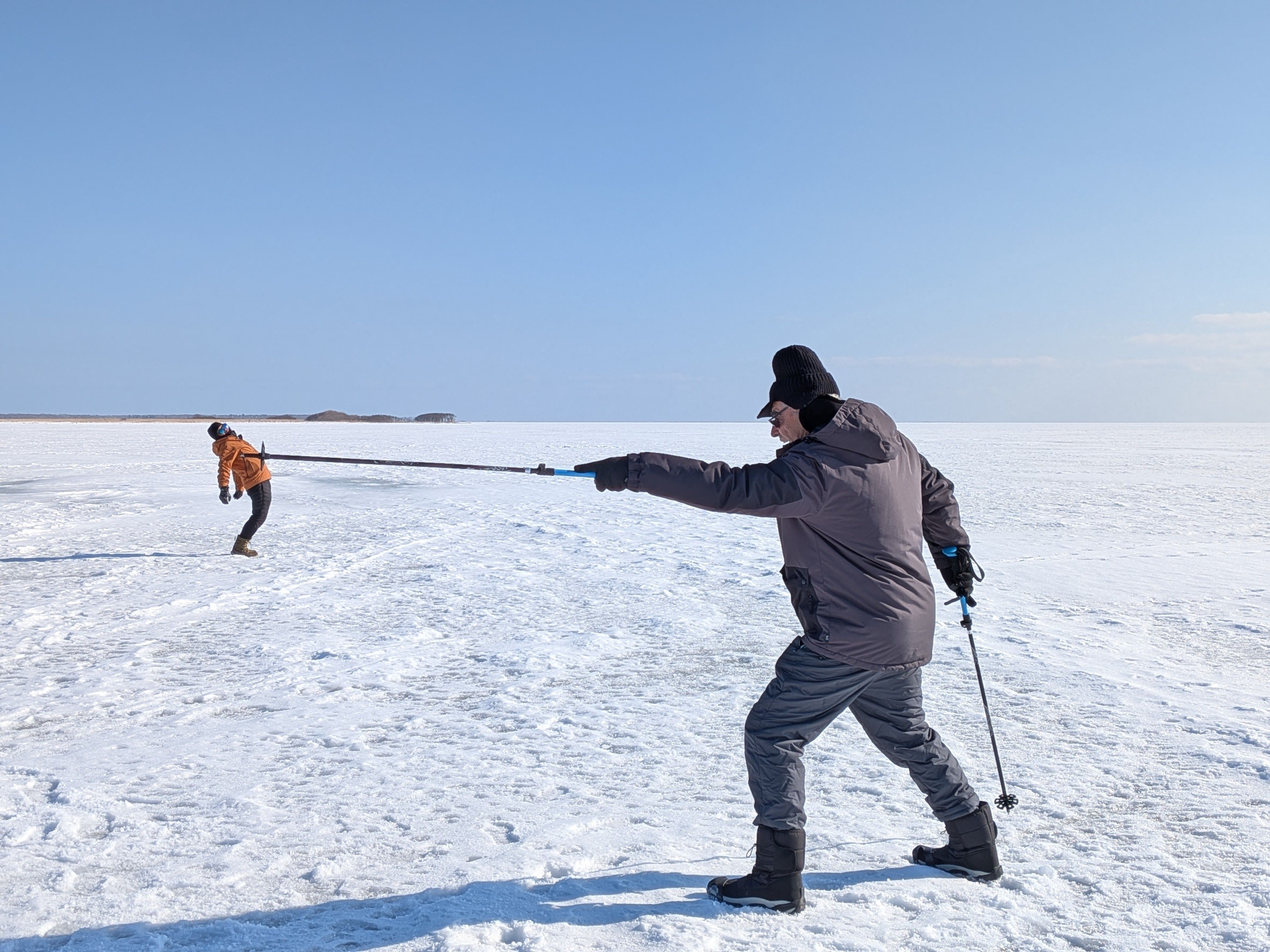
〇〇 ga itai = My 〇〇 hurts.
This phrase is useful if you are visiting a doctor, are at a drug store buying medicine or need to communicate to someone, “Ouch!” It will quickly and efficiently communicate what, roughly, the problem is. You can use this with any and all body parts and you’ll find some useful examples listed below. Alternatively, if this is too much to remember, just remember “Itai!” (“It hurts!”) and point to the part of your body that is hurting!
Some body parts you might find hurting:
- Atama = Head
- Ashi = Leg(s) and foot (feet)
- Ude = Arm(s)
- Te = Hand(s)
- Yubi = Finger(s)
- Ashi-yubi = Toe(s)
- Kubi = Neck
- Te-kubi = Wrist(s)
- Ashi-kubi = Ankle(s)
- Hiza = Knee(s)
- Hiji = Elbow(s)
- Onaka = Stomach
- Senaka = Back
- Mune = Chest
Putting them together:
- Doko ga itai? = Where hurts?
- Ashi ga itai. = My leg hurts.
If you want to communicate that you have a fever or some other ailment not listed above, take a look at our guide to navigating Japanese drugstores for more handy phrases.
Kyukyusha wo yonde (kudasai) = Call an ambulance (please)
Hopefully, you won’t ever need to say this while in Hokkaido - but in the rare event that you do have a medical emergency and you know you need to see someone urgently, it’s time to break out this expression.
Final Exam - Hokkaido Dialect #
You’ve mastered Japan’s tricky counting system. You’re beginning to understand your guide when they say what time and where to meet tomorrow in Japanese. You even managed to tell a doctor all about your tummy trouble… but there is one final class for you to pass before you can truly master the Japanese language - and that’s Hokkaido dialect!
Below are some phrases that are quite commonplace among Hokkaido folks. Dropping one of these into a conversation is sure to be an instant ice-breaker and before you know it, you’ll be shoulder-to-shoulder in a rural Hokkaido izakaya with locals!
Shibareru = It’s cold
Literally, “shibareru” means “to be strangled”! The implication is that it is so cold, it’s hard to breathe. Hokkaido locals mutter this all the time in midwinter!
Menkoi = Cute
This is the Hokkaido equivalent of the term “kawaii”, meaning “cute” in regular Japanese. You can use it in reference to things that you would usually describe as “cute” in English - pets and various animals, children, clothes or accessories and so on.

Oban desu = Good evening
Do you remember “konbanwa” from the greetings section of this blog post? This phrase is the Hokkaido dialect equivalent. As with “konbanwa”, you can use this as soon as it starts to get dark.
Keppare! / Kepparu! = Do your best! / I’ll do my best!
Hokkaido dialect for “Ganbare!” / “Ganbaru!” This is a great one to break out on particularly tough stretches of Hokkaido’s mountains!
Nanmo = You’re welcome
“Nanmo” is said to be short for a longer Japanese phrase - “Nanimo ki ni shinaide kudasai”, which means “Please don’t worry about a thing.” In Hokkaido, this abbreviated version is used after someone thanks you. A natural translation is “You’re welcome,” but the nuance is more along the lines of, “Don’t worry about it,” or “No problem.”
Class dismissed!
We hope that now, you’ll be able to stride off on your adventures around Hokkaido armed with the confidence to communicate! Japanese people are aware of how niche and difficult their language is to learn and, as such, deeply appreciate when visitors have taken even just a little effort to learn some basic phrases - especially in a remote place like Hokkaido. You may even find that in turn, they’ll be keen to practice their English with you!
Even on our guided tours, there will be plenty of opportunities to practice your Japanese! Our guides are always delighted - and wholeheartedly supportive - when guests want to practice any phrases they’ve picked up. They’ll also help you to train your ear for the language and pick up other useful phrases along the way. By the end of their tours, many of our guests feel much more confident about the language barrier, with useful phrases in their back pocket to break out during any onward travel in Japan.
So give your newfound language skills a shot - you never know what kind of memories it will lead you to make. But if you’d like a bit of extra support while you’re finding your feet (or your tongue!) then you might like to join one of our guided tours. On the other hand, if you’re already confident enough in Japanese that you’re ready to set off at your own pace, feel free to explore our self-guided options too.
Good luck putting your Japanese language skills to the test on your travels - Keppare!
Where will your Japanese take you?
With a handle on the language, Hokkaido is closer than ever.